
Suggested

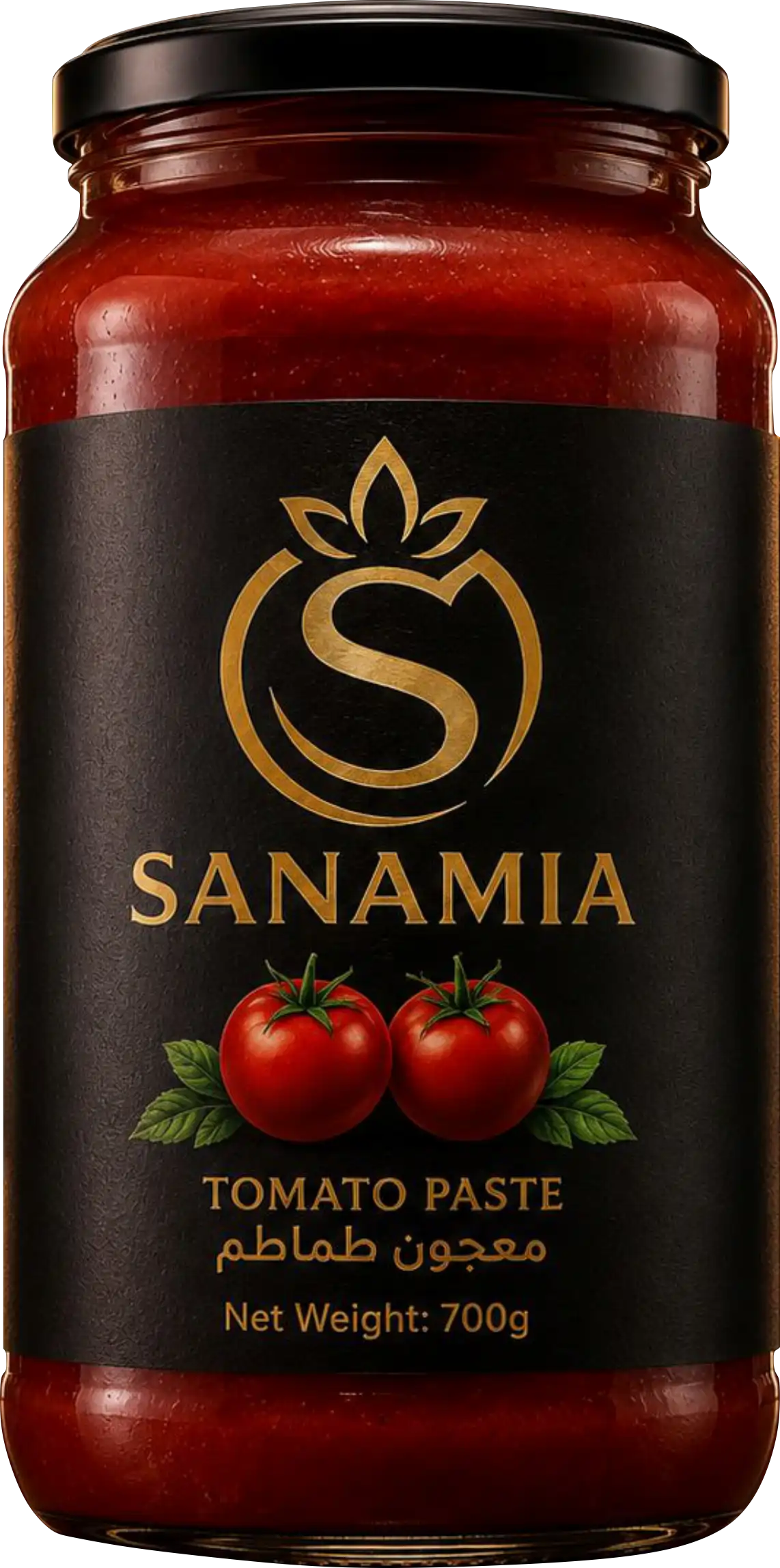
720g Glass Jar Tomato Paste: A Technical and Export-Focused Whitepaper by SANAMIA

Suggested Structure

1. Why the 720g Glass Jar Format Still Matters in Modern Retail

2. Raw Material Selection and the Agricultural Foundation of Tomato Paste Quality

3. Process Engineering Behind Consistent Tomato Paste Performance

4. Quality Control Parameters International Buyers Should Never Ignore

5. Why Glass Packaging Remains a Premium Choice for Tomato Paste

6. Shelf Stability, Food Safety, and Export Durability

7. SANAMIA’s Private Label and OEM Advantage

8. What Importers and Distributors Should Expect from a Serious Supplier

9. Conclusion

Internal Linking Suggestions

  • Private Label / OEM Services
  • Tomato Paste Product Page
  • Export & International Markets
  • Quality Assurance / Certifications
  • Packaging Solutions
  • Contact / Inquiry Page

Suggested Image Alt Text

  • SANAMIA 720g glass jar tomato paste for export markets
  • premium tomato paste in glass jar by SANAMIA
  • tomato paste quality control and packaging inspection
  • private label tomato paste manufacturing by SANAMIA
  • export-ready glass jar tomato paste packaging

720g Glass Jar Tomato Paste: A Technical and Export-Focused Whitepaper by SANAMIA

Executive Summary

In international food trade, tomato paste is often treated as a commodity. In reality, serious buyers know it is not. Behind every retail-ready jar stands a chain of decisions that directly affect shelf performance, consumer acceptance, logistical efficiency, and long-term brand trust. From raw material selection and concentration control to packaging integrity and export documentation, the difference between an ordinary tomato paste supplier and a dependable B2B manufacturing partner lies in process discipline.

At SANAMIA, tomato paste in 720g glass jars is not positioned as a generic retail item. It is developed as an export-ready product format designed to answer the real operational concerns of importers, distributors, private label buyers, and modern retail partners. These concerns are practical and measurable: consistent soluble solids, stable color, controlled acidity, reliable closure performance, shelf stability, packaging durability, and documentation that supports market entry across different regulatory environments.

The 720g glass jar format remains one of the most commercially relevant pack sizes in many international markets because it sits at the intersection of family consumption, visual product trust, retail presentation, and packaging familiarity. For distributors, it offers a recognizable and scalable SKU. For private label buyers, it offers strong branding surfaces and premium shelf perception. For end consumers, it communicates transparency, product visibility, and confidence in what they are buying.

This whitepaper explains why SANAMIA approaches 720g glass jar tomato paste as more than a filling operation. It is a system that integrates agricultural sourcing logic, controlled production parameters, quality assurance discipline, and export-oriented packaging strategy. The objective is not only to deliver tomato paste. The objective is to deliver a product that performs consistently across markets, supports brand credibility, and reduces sourcing risk for professional buyers.

For companies evaluating long-term supply partnerships, this distinction matters. Price can open a conversation, but reliability is what sustains the business. SANAMIA’s position is built around that principle.

1. Why the 720g Glass Jar Format Still Matters in Modern Retail

In a market increasingly crowded with flexible packaging, sachets, cans, pouches, and multi-size retail formats, the 720g glass jar continues to hold a strong and defensible position. Its relevance is not based on nostalgia. It is based on functionality, perception, and commercial practicality.

For many retail channels, the 720g glass jar represents a balanced pack size. It is large enough to serve family consumption patterns and foodservice-adjacent home cooking, yet still compact enough to remain shelf-friendly and visually attractive in supermarkets, grocery chains, and export distribution networks. This format is especially useful in markets where tomato paste is not a niche ingredient, but a daily culinary staple. In such markets, pack size is not merely a volume question. It affects turnover rate, repurchase patterns, transportation economics, and on-shelf competitiveness.

One reason the 720g format performs well is its familiarity. Buyers in many regions already recognize this size range as a standard retail proposition for tomato paste. That familiarity reduces friction. Retailers do not need to “educate” the shelf. Consumers immediately understand the pack. Importers also benefit from predictable category placement because the format aligns with existing merchandising habits in many countries.

Glass itself adds another layer of commercial value. Unlike opaque or semi-opaque alternatives, glass allows direct visual inspection of product color, texture, fill consistency, and overall presentation. In food categories where appearance strongly influences perceived quality, this is a meaningful advantage. A well-filled, properly sealed, rich red glass jar signals confidence. It tells the consumer, without explanation, that the producer is willing to let the product speak for itself.

For premium-oriented retail strategies, this matters even more. Packaging is not only a container; it is a market signal. A glass jar helps position tomato paste as a more trustworthy, more carefully packed, and more premium retail product. This can be highly relevant for distributors targeting supermarkets, ethnic food chains, premium grocery channels, and export markets where imported shelf presence influences purchase decisions.

The format also offers strong practical value for private label projects. A 720g glass jar provides an excellent branding canvas. Label layout, multilingual compliance text, private brand identity, barcode placement, and market-specific regulatory information can all be integrated clearly. The jar size is large enough to support professional label communication without appearing crowded or compromised. For brand owners launching or scaling a retail tomato paste line, this matters because packaging clarity affects both compliance and consumer trust.

From a supply chain perspective, the 720g jar format can support efficient SKU planning when handled by an experienced manufacturer. It is a format that can be standardized, forecasted, palletized, and integrated into broad export programs. When supported by proper secondary packaging, controlled loading patterns, and strong closure integrity, it becomes a practical unit for regional distribution and containerized international trade.

Another overlooked advantage is usage psychology. Consumers often associate glass jars with products that are more authentic, less industrially anonymous, and more aligned with kitchen traditions. In categories like tomato paste, where sensory expectations are deeply rooted in home cooking, this perception can influence brand preference. A jar that looks stable, clean, and premium creates reassurance before the product is even opened.

At SANAMIA, the 720g glass jar is therefore not treated as a random packaging choice. It is considered a strategic retail and export format. It supports visual trust, premium positioning, practical consumer usage, and distribution scalability. In B2B terms, this means the format is not simply easy to sell; it is easier to place, easier to position, and easier to integrate into long-term market development plans.

That is exactly why serious buyers continue to request it.

2. Raw Material Selection and the Agricultural Foundation of Tomato Paste Quality

No tomato paste manufacturer can build a reliable export-grade product on weak raw material foundations. Before concentration, thermal treatment, filling, closure, labeling, or palletization begins, quality is already being shaped in the field. This is where many generic product descriptions fail: they start at the factory gate, as if processing alone creates excellence. It does not. Processing can preserve, standardize, and optimize quality, but it cannot fully compensate for poor agricultural input.

At SANAMIA, the quality logic behind tomato paste begins with the understanding that finished product performance is inseparable from tomato selection. The final sensory profile, color depth, solids level, consistency behavior, and overall processing efficiency all depend on the characteristics of the incoming fruit. For a 720g glass jar retail product, where visual appearance and eating quality matter significantly, this relationship becomes even more critical.

The first requirement is varietal suitability. Not all tomatoes are equally suitable for paste production. Industrial tomato varieties selected for concentration typically offer higher natural soluble solids, more efficient pulp yield, deeper red pigmentation, and better behavior under controlled thermal processing. This affects not only output efficiency but also the ability to achieve a stable, commercially desirable finished product without forcing the process into unnecessary extremes.

Ripeness control is another essential variable. Tomatoes harvested too early may lack the full color development, sugar-acid balance, and maturity profile required for high-quality paste. Tomatoes harvested too late may introduce softness, breakdown risk, inconsistent solids, or higher process losses. A serious manufacturer evaluates incoming raw material not merely by volume, but by usability and suitability for targeted product specifications.

This is particularly important for glass jar retail formats because the consumer sees the product directly. In bulk industrial applications, certain visual nuances may be less commercially decisive. In a retail jar, they are exposed. Color consistency, clean appearance, and stable texture become part of the product promise. That means the agricultural base must support a finished paste with repeatable visual and functional performance.

Raw material integrity also influences process control downstream. Tomatoes with better solids structure, healthier pulp characteristics, and stronger color retention allow more stable concentration behavior and more predictable quality outcomes. In contrast, inconsistent raw material puts unnecessary pressure on processing parameters and increases the risk of variation between batches. For B2B buyers, that variation creates avoidable commercial problems: inconsistent shelf presentation, different cooking performance, and quality complaints across shipments or markets.

Another critical factor is raw material cleanliness and initial defect management. The agricultural foundation of quality is not only about good tomatoes; it is also about disciplined sorting, removal of damaged fruit, and the control of foreign material risks before the product enters deeper processing stages. This reflects manufacturing seriousness. Buyers may not always see this step directly, but they absolutely experience its results in product reliability, reduced defects, and cleaner specification compliance.

For export-oriented tomato paste, agricultural sourcing must also support broader food safety expectations. A strong processing line is essential, but it functions best when paired with a raw material chain that is handled with discipline and traceability awareness. International buyers increasingly evaluate suppliers not only by product samples, but by whether their quality system appears coherent from input to finished goods. In that framework, raw tomatoes are not an incidental variable. They are the first link in the credibility chain.

At SANAMIA, the agricultural starting point is therefore part of the product strategy, not a background detail. The objective is to create a manufacturing flow where the incoming fruit supports the final promise of the brand: concentrated tomato character, stable red appearance, reliable consistency, and export-grade repeatability. This matters because global buyers are not only purchasing jars. They are purchasing confidence in every shipment that will follow the first one.

In premium and private label environments, that confidence becomes even more valuable. A buyer putting its own brand on a tomato paste jar does not merely want supply. It wants assurance that the supplier understands how agricultural input affects consumer-facing performance. If that understanding is missing, the risk eventually reaches the shelf.

This is one of the reasons SANAMIA treats tomato paste manufacturing as a chain of controlled decisions rather than a simple conversion process. Reliable retail quality starts long before the jar is filled. It starts with the raw material philosophy behind the product.

——

3. Process Engineering Behind Consistent Tomato Paste Performance

In manufacturing, “consistency” is the most expensive variable to manage and the most valuable asset to export. For a 720g glass jar retail SKU, consistency is not just a target; it is a requirement for market retention. If the consumer buys a jar today and finds a different texture or flavor profile in the next purchase, the brand promise is broken.

At SANAMIA, the engineering of consistent tomato paste begins with the decision between Cold-Break and Hot-Break systems, followed by rigorous concentration control.

Controlled Thermal Treatment (Break)

The “break” process—the initial heating of the crushed tomatoes—is where the primary structural characteristics of the paste are determined.

  • Hot-Break: For applications requiring high viscosity and strong body, hot-break processing inactivates pectinolytic enzymes immediately, preserving the pectin and resulting in a paste with higher viscosity and flow stability (often measured via Bostwick). This is typically the preferred route for retail glass jar formats to ensure the product maintains its “clinging” quality when used in cooking.
  • Cold-Break: This method provides a more natural, fresh-tomato flavor profile and higher color retention, though it results in lower final viscosity.

SANAMIA’s process engineering allows for precise adjustment of these thermal cycles to match the required organoleptic profile of the target market, ensuring that the finished 720g jar delivers the exact mouthfeel and color consistency expected by the end user.

Concentration and Solids Management

The concentration stage is where the “Brix” level is established. For retail-ready 720g glass jars, our target soluble solids are strictly maintained at 28–30° Brix. This range offers the optimal balance of concentration, shelf stability, and culinary utility.

It is important to distinguish this from the 36–38° Brix aseptic paste used in bulk industrial reconstitution. Mixing these standards is a common error in less sophisticated supply chains. SANAMIA maintains a clear segregation: our glass jar lines are engineered for 28–30° Brix to ensure the paste is ready for immediate kitchen use, while our industrial aseptic lines handle the higher concentration demands for bulk remanufacturing. This prevents product dilution issues and ensures the consumer receives a high-density, authentic tomato product.

Process Standardization

To ensure batch-to-batch uniformity, every stage of the process—from extraction and evaporation to sterilization—is monitored using closed-loop control systems. We focus on:

  • Evaporation efficiency: Maintaining the precise moisture reduction without thermal damage that could lead to “cooked” off-flavors.
  • Vacuum sealing: Essential for the 720g glass format, our filling lines integrate real-time vacuum checking to guarantee that the headspace in the jar remains inert, preserving the product’s color and flavor for its entire shelf life.

4. Quality Control Parameters International Buyers Should Never Ignore

Professional food importers do not evaluate tomato paste by taste alone. They evaluate it by a specification sheet—the technical DNA of the product. When sourcing 720g glass jars, SANAMIA adheres to a rigorous QC protocol that covers the parameters that define export-grade quality.

Instrumental Color Measurement (a* / b* values)

Visual appeal is the consumer’s first indicator of quality. While subjective assessment is common, SANAMIA uses instrumental color measurement (CIE L*a*b* color space).

  • a* value: We prioritize high positive a* values, which indicate a vibrant, deep red color.
  • b* value: Controlled to ensure the paste does not skew toward brown or orange tones, which are signs of thermal abuse or poor raw material quality.

This data-driven approach removes subjectivity and provides international buyers with a quantifiable guarantee of what they are shipping.

pH and Titratable Acidity

Tomato paste is a low-acid food, but the balance of pH and titratable acidity is vital for microbial safety and flavor.

  • pH: Generally managed below 4.5 to support safety, though our target is usually 4.1–4.3 for optimal flavor balance.
  • Titratable Acidity: This measures the “total acid” profile, which is what the consumer actually tastes as “tang” or “brightness.” By balancing these, we ensure the paste provides that signature tomato sharpness without being overly acidic or flat.

Consistency and Flow (Bostwick)

The Bostwick value is our benchmark for flow characteristics. A high Bostwick value means a “thin” paste; a low value means a “thick” or “heavy” paste. For a 720g glass jar, we standardize this to ensure the product does not separate (syneresis) during shelf life. This creates a visually appealing product that stays uniform from the first spoon to the last.

Microbiological and Safety Compliance

Export-grade quality is defined by what you *don’t* see: microbial spoilage, foreign matter, or chemical contaminants. Our QC protocol includes:

  • Container and Closure Integrity: Testing vacuum levels to ensure the jar remains airtight throughout the supply chain.
  • Microbiological monitoring: Regular sampling to ensure that the sterilization process—tailored specifically for the 720g glass format—has effectively eliminated spoilage risks.

5. Why Glass Packaging Remains a Premium Choice for Tomato Paste

Packaging is the final frontier of product quality. In the 720g category, the choice of glass is not an aesthetic afterthought; it is a tactical decision for premium market positioning.

Chemical Inertness

Glass is chemically inert. It does not interact with the acidic nature of tomato paste, ensuring that the flavor profile remains “pure.” Unlike some internal lacquers in metal cans, which can occasionally impart metallic notes if the integrity is compromised, glass guarantees that the consumer tastes nothing but the tomato. This is crucial for brands that market “natural,” “clean label,” or “premium” quality.

Visual Product Visibility

In retail, “seeing is believing.” The glass jar allows the consumer to visually verify the product’s color and texture before purchase. This transparency builds instant trust—a commodity that is difficult to manufacture but easy to leverage. For distributors in competitive markets, this visibility can be the deciding factor that leads a consumer to pick a SANAMIA-produced jar over an opaque competitor.

Premium Retail Appearance

Glass suggests value. It is the packaging of choice for jams, high-end sauces, and preserved delicacies. Placing tomato paste in a 720g glass jar immediately elevates the SKU from a “utility ingredient” to a “premium kitchen staple.” This allows our partners to command higher shelf positioning and justify premium pricing, which is essential for private label buyers looking to establish their own high-value brand image.

Consumer Trust and Reusability

The glass jar is perceived as a “sturdy” container. It offers the consumer a sense of control and convenience. The resealable nature of the lid (closure performance) ensures that the paste can be stored effectively after the first opening, maintaining product quality even when usage is spread over several days. Furthermore, the recyclability of glass aligns with the growing global consumer demand for sustainable packaging solutions, making it a forward-looking choice for modern retail partners.

6. Shelf Stability, Food Safety, and Export Durability

For importers operating in diverse climate zones—from the humid tropics to the dry, hot regions of the Middle East—the “shelf stability” of tomato paste is a critical supply chain factor. A product that cannot withstand the rigors of international shipping and warehouse storage is a liability, not an asset.

Export-Grade Durability

At SANAMIA, shelf stability is engineered through a combination of thermal sterilization and precise vacuum sealing. Our 720g glass jars are processed in autoclaves with validated Fo values, ensuring commercial sterility without compromising the delicate flavor profile of the tomato.

For the international buyer, this translates to:

  • Minimal Risk of Spoilage: Our processing standards eliminate the risk of thermophilic spoilage, even in warm storage conditions.
  • Extended Shelf Life: We guarantee a shelf life that meets the stringent requirements of international retail, allowing for longer inventory rotation times.
  • Transit Resilience: The physical durability of our closure system is tested to withstand the vibrations, pressure changes, and temperature fluctuations common in containerized sea freight.

Compliance as a Safety Net

Food safety is the non-negotiable foundation of export. SANAMIA’s production environment adheres to international standards (HACCP, ISO, etc.). We don’t just produce tomato paste; we produce documentation-backed assurance. Every batch carries a digital paper trail, allowing for full traceability. For an importer, this documentation is the key that unlocks customs clearance and retail listing processes.

7. SANAMIA’s Private Label and OEM Advantage

In the current retail landscape, private label (PL) is not just a “cheaper option”—it is a strategic growth driver for distributors. SANAMIA is engineered to be more than a manufacturer; we are an OEM partner designed to scale with your brand.

Multilingual and Regulatory Adaptability

A generic product fails when it hits a new market because of labeling or regulatory hurdles. SANAMIA’s team proactively manages the labeling requirements for different regions (GCC, Europe, Africa). Whether you need specific nutritional panels, localized language support, or compliance with specific food standards, our team ensures the final jar is retail-ready for *your* target market, not just our production line.

Packaging Customization

While the 720g glass jar is our standard, our OEM agility allows for packaging customization. This includes:

  • Custom Cap Designs: Branding the lid to reinforce your private label identity.
  • Label Finishes: Options for matte, glossy, or textured labels that make your product stand out on the premium shelf.
  • Secondary Packaging: Tailored carton designs that optimize logistics for your specific warehouse racking and handling systems.

We do not believe in “one size fits all.” We believe in “one size fits *your market*.”

8. What Importers and Distributors Should Expect from a Serious Supplier

If you are a sourcing manager or a business owner, you shouldn’t just ask about price. You should ask the questions that uncover the true capability of your supplier. When evaluating a tomato paste manufacturer, demand answers to these three critical areas:

1. Process Consistency: “How do you ensure the color and viscosity are identical in every shipment, regardless of the harvest season?” (A serious supplier will speak about instrumentation, not intuition.)

2. Supply Chain Transparency: “Can you provide full traceability from the raw material batch to the final shipping pallet?” (Traceability is the first sign of a professional operation.)

3. Regulatory Support: “Do you have a dedicated team that handles export documentation, health certificates, and market-specific compliance?” (A manufacturer that isn’t thinking about *your* destination market is not an export partner.)

At SANAMIA, we welcome these questions. We build our business on the answers.

9. Conclusion

Tomato paste in 720g glass jars is a product defined by its versatility and its demand. Yet, for the professional buyer, it is also a product defined by its risks. Quality inconsistency, shelf instability, and opaque supply chains are the hidden costs of choosing the wrong manufacturer.

SANAMIA approaches this product with a philosophy of engineering-led production. From the agricultural foundation of our tomato selection to the precise thermal control of our sterilization lines and the premium reliability of our glass packaging, we are focused on reducing the burden on our partners.

We do not compete on being the “cheapest” manufacturer. We compete on being the most reliable export partner. When you choose SANAMIA, you are not just sourcing a commodity. You are securing a supply chain that protects your brand, satisfies your consumers, and supports the long-term growth of your business.

We invite you to experience the SANAMIA difference. Let’s build your brand’s future, one jar at a time.

SEO Note for Publishing:

  • Internal Link: Ensure the final CTA (Call to Action) links directly to your “Contact Us” or “Private Label Inquiry” page.
  • Image Strategy: Include high-resolution, professional photos of the 720g jar (both the label details and the product texture) at the beginning and the end of the article.
  • Author/Brand Voice: Ensure the “About SANAMIA” section in your website footer echoes the tone of this whitepaper—professional, data-driven, and export-focused.